
Not all marine wiring serves the same purpose. While many boat owners focus on engines, batteries, and electronics, the wiring connecting these systems is just as important. Using the wrong cable can lead to voltage drops, equipment failures, and costly repairs.
Two of the most important components of any boat's electrical system are marine battery cable and marine electrical cable. Although they may look similar, they are designed for different applications.
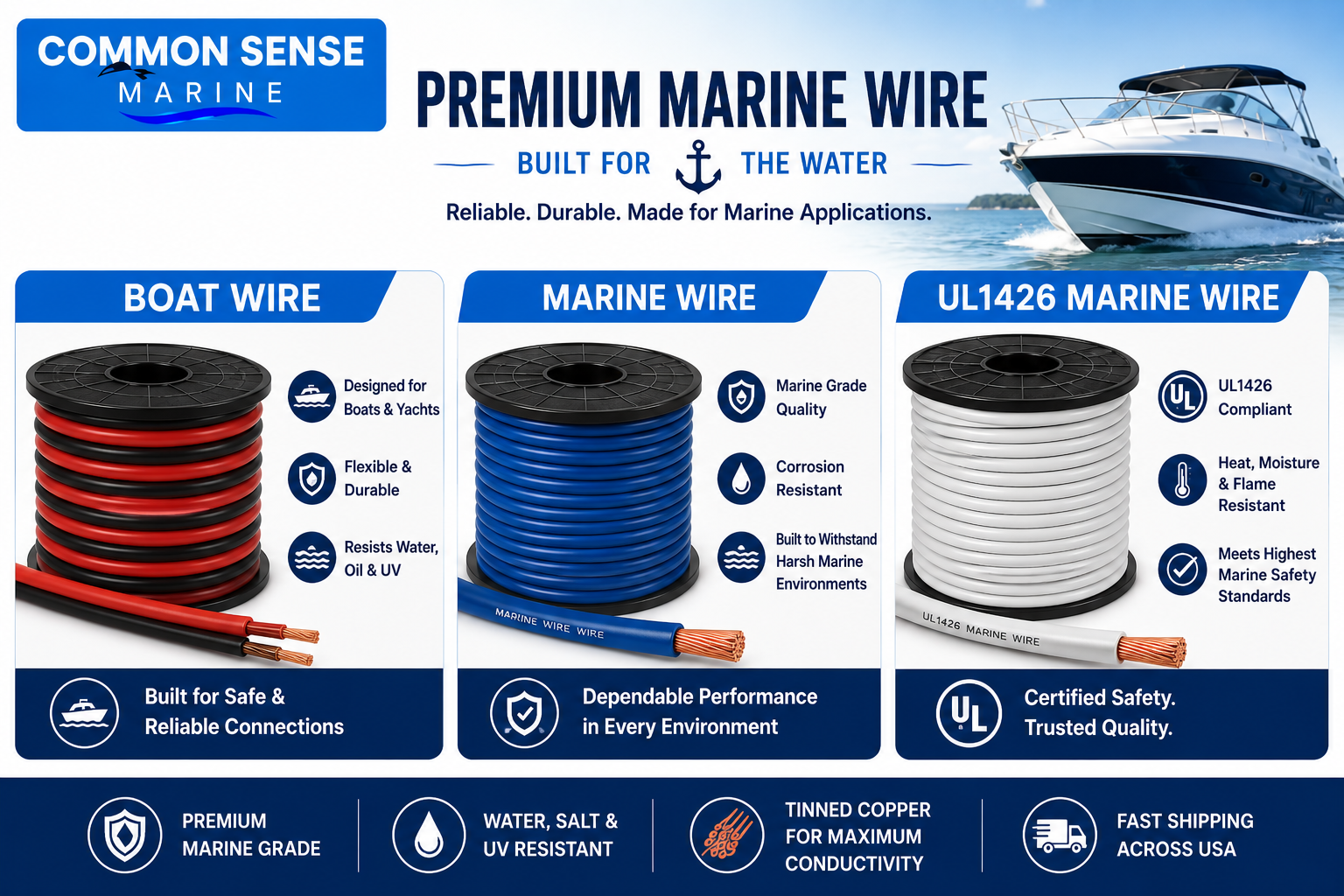
At Common Sense Marine, we help boat owners choose wiring solutions that perform reliably in demanding marine environments. This guide explains the differences between these cable types, when to use each one, and how proper selection can improve the safety and efficiency of your boat's electrical system.
What Is Marine Battery Cable?
Marine battery cable is designed to carry high electrical currents between batteries, engines, and other power-hungry equipment.
Unlike standard wiring, marine battery cable is built with:
Heavy-duty stranded copper conductors
Flexible construction for easy routing
Thick insulation resistant to moisture, oil, and abrasion
Corrosion-resistant materials for long-term durability
Because battery systems handle significant current loads, using the proper cable is essential for maintaining performance and preventing overheating.
Common Uses of Marine Battery Cable
Marine battery cable is typically used for:
Battery banks
Engine starting systems
Trolling motors
Inverters
High-current DC circuits
These applications require cables capable of delivering consistent power without excessive voltage loss.
What Is Marine Electrical Cable?
While battery cables handle high-current applications, marine electrical cable is used throughout the rest of the boat's electrical system.
Marine electrical cable distributes power to:
Navigation lights
Bilge pumps
Switch panels
Radios and communication systems
GPS and navigation electronics
Cabin lighting
These cables are designed to provide reliable power distribution while withstanding the harsh conditions commonly found on boats.
Key Differences Between Marine Battery Cable and Marine Electrical Cable
Although both are designed for marine environments, their functions are very different.
Current Capacity
Marine battery cable carries much higher electrical loads than marine electrical cable.
Cable Size
Battery cables are generally larger because they must handle greater current demands.
Application
Battery cable connects major power sources and equipment, while marine electrical cable powers accessories, lighting, and control systems.
Flexibility
Both are flexible, but marine battery cable is often designed with a higher strand count to support large-current applications and easier installation.
Understanding these differences helps ensure the right cable is used in the right place.
Why Marine-Grade Cable Matters
Boats operate in environments where ordinary wiring quickly deteriorates.
Marine-grade cables are designed to resist:
Saltwater corrosion
Moisture intrusion
Vibration
UV exposure
Oil and fuel contamination
Many quality marine cables use tinned copper conductors, which provide additional protection against corrosion and help maintain electrical performance over time.
Real-World Example: A Costly Wiring Mistake
A boat owner upgraded his electronics and installed additional lighting using leftover automotive cable. Initially, everything worked fine.
After one boating season:
Corrosion formed inside the wiring
Several circuits experienced voltage drops
Lights began flickering intermittently
Repairs required replacing large sections of the wiring system
The issue could have been avoided by using proper marine electrical cable from the beginning.
How to Choose the Right Marine Cable
Selecting the right cable involves more than choosing a size.
1. Match the Cable to the Application
Use marine battery cable for high-current systems and marine electrical cable for general power distribution.
2. Select the Correct Gauge
Undersized cable can cause:
Excessive heat
Reduced efficiency
Equipment damage
Always size cables according to the current load and cable length.
3. Look for Marine-Grade Construction
Choose cables with:
Tinned copper conductors
Durable insulation
Moisture and UV resistance
4. Consider Future Expansion
If you plan to add equipment later, installing slightly larger cable now can save time and money in the future.
Installation Tips for Long-Term Reliability
Proper installation is just as important as choosing the right cable.
Use Marine-Grade Connectors
Heat-shrink terminals help protect connections from moisture and corrosion.
Support Cables Properly
Secure wiring to prevent movement and abrasion.
Keep Wiring Organized
Label cables and maintain clean routing paths for easier troubleshooting.
Inspect Regularly
Routine inspections can identify potential issues before they become serious problems.
Benefits of Investing in Quality Marine Wiring
High-quality marine battery cable and marine electrical cable provide:
Better electrical efficiency
Improved system reliability
Reduced maintenance costs
Enhanced safety
Longer service life
The upfront investment is often far less than the cost of repairing electrical failures caused by low-quality wiring.
Conclusion
Understanding the difference between marine battery cable and marine electrical cable is essential for building a safe and dependable boat electrical system. Each serves a unique purpose, and using the correct cable helps ensure efficient power delivery, reliable operation, and long-term durability.
At Common Sense Marine, we believe quality wiring is the foundation of every reliable marine electrical system. By choosing the right cable for each application, boat owners can reduce maintenance, improve performance, and enjoy greater peace of mind on the water.

Write a comment ...